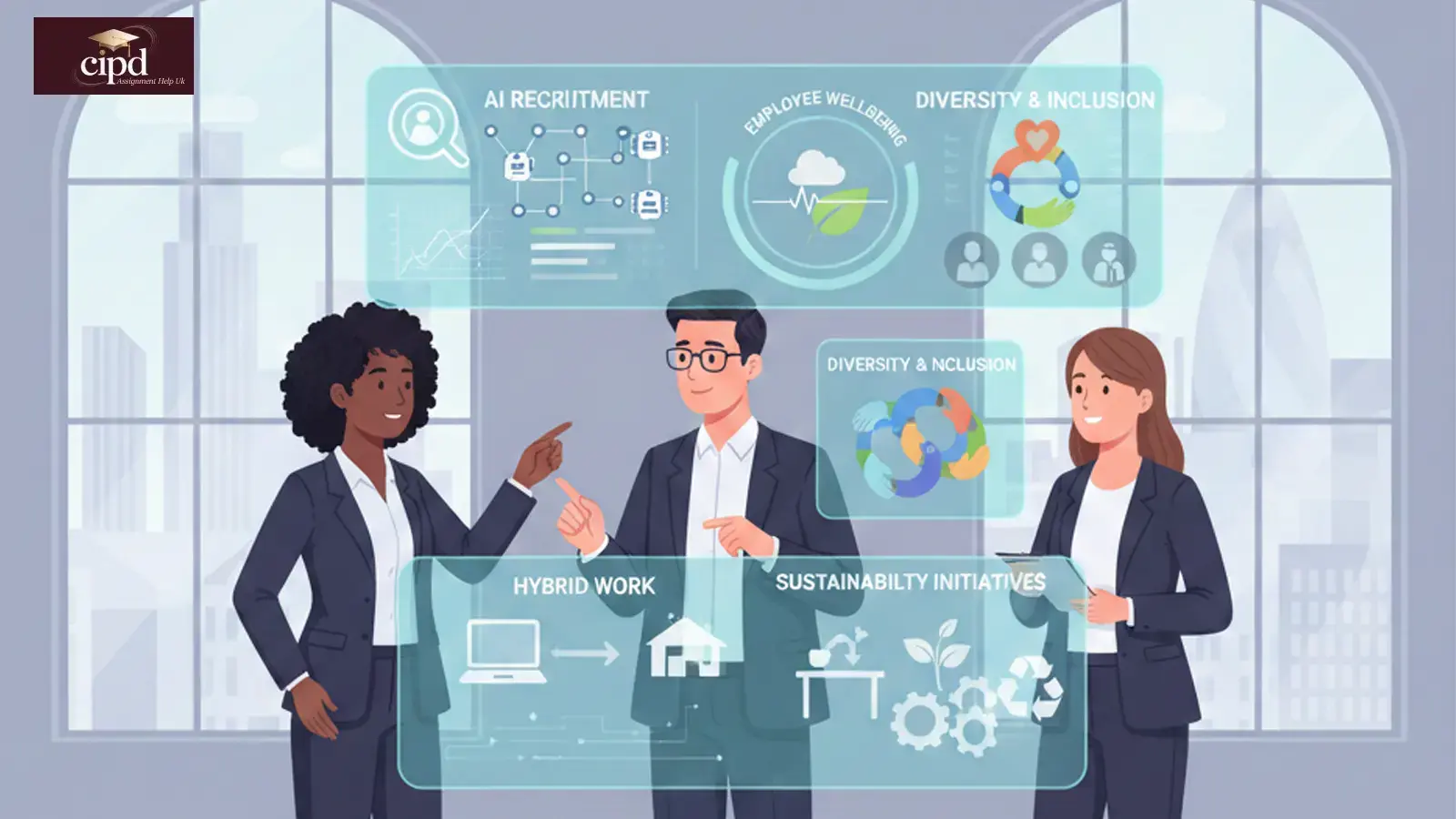
The HR landscape in the UK has changed quickly and looks nothing like it did before 2024. Policies, compliance and paperwork was once mainly focused - has now become far more people-focused and data-led. Technology, employee expectations and social responsibility are shaping how organisations manage their workforce. For HR students and early-career professionals, especially those studying with CIPD, adapting these changes isn’t something optional, it’s essential.
HR is no longer about policies. It is about people, performance and predictive data. This shift is already visible across the UK. According to the CIPHR HR Trends Report, over 63 percent of UK HR departments are investing in AI and automation tools in 2026. This single statistic shows how quickly the profession is moving forward.
For CIPD learner, these trends appear regularly in assignments and case studies. What companies want from upcoming HR is taught by them. The sections below explore the key HR trends shaping the UK in 2026 and explain why they matter for students preparing to enter the field.
1. AI and Automation are Reshaping Talent Management
Predictive Analytics in Recruitment
Now recruitment is not only about CV reviews and interview impressions. By 2026, many UK organisations use AI-powered tools to predict how a candidate will perform in a role, based on past performance outcomes, retention rates and skills match to support hiring decisions.
Algorithmic shortlisting tools are now common in large UK companies, especially in finance and retail. These systems scan your CVs against role requirements and your past jobs data to highlight strong matches. This helps HR teams reduce time-to-hire with precision because the system spots patterns humans might miss at first glance.
When HR students look at today’s hiring methods, ideas from CIPD on staffing and talent planning start making more sense. Seeing how data and AI guide recruitment decisions can strengthen assignment answers, which is why many learners seek HR assignment help to better understand modern talent management practices.
Automating Routine HR Tasks
Automation has also transformed everyday HR administration like onboarding forms and policy queries are now handled by chatbots and HR systems. This frees HR professionals who used to drown in forms now spend time where it matters more - working with people, shaping culture, solving real issues.
A real example is the NHS, which uses Robotic Process Automation to manage payroll checks and staff data updates. These systems reduce errors and improve efficiency across large workforces.
For students, this highlights an important point. HR roles are evolving. Administrative skills alone are no longer enough. Future HR professionals need to understand systems, workflows and digital tools.
Human-AI Collaboration
Still, people run HR - not AI. AI only making it efficient and fast but still human judgement and empathy remain critical. AI supports HR by providing insights, not final decisions.
This has clear implications for HR development planning. Professionals must build digital confidence while strengthening soft skills. CIPD students who recognise this balance are better prepared for future roles.
2. Employee Wellbeing Takes Centre Stage
Mental Health Support as a Strategic Priority
Now more than ever, UK companies are paying attention on employee wellbeing as links between mental health, productivity and retention grow clearer. Increased investment shows a shift toward treating wellbeing as a core business priority.
Some UK councils are now offering funded counselling as a preventative measure. This early intervention approach represents a significant change in workplace care.
CIPD research and learning highlight wellbeing as a central HR concern, showing how organisations can protect employee health while maintaining performance.
Hybrid Work-Life Balance Initiatives
Hybrid working is now widely expected rather than optional. Government data shows that 82% of UK workers value flexible arrangements, viewing them as a matter of fairness.
HR plays a critical role in managing hybrid work by balancing flexibility with clear expectations and ensuring inclusion and equal treatment. The topic features strongly in CIPD assessments, linking to employment law, engagement and organisational behavior.
Burnout Prevention Through HR Tech
With HR technology early identification of workload pressures can be noticed. Tools like Microsoft Viva help organisation detecting stress patterns and enabling timely intervention.
CIPD guidance emphasises ethical data use, ensuring employee personal details safe while supporting mental health and preventing burnout.
3. DEI Goes Beyond Buzzwords
Inclusive Hiring Practices
By 2026, the UK is moving towards a fair hiring system. Many companies now hide names on CVs to reduce bias, while software helps employers write fairer, more inclusive job ads. Some organisations even audit their AI systems to catch unfair patterns early.
At the BBC, data is used to track equal opportunities at every stage of recruitment. For students studying with CIPD, referencing these real systems often strengthens coursework. Evidence of results matters far more than repeating general claims.
Neurodiversity at Work
UK workplaces are recognising that people think and work differently. Instead of relying on traditional interviews, some employers now assess practical ability. GCHQ, for example, uses alternative hiring routes to test real skills.
As these approaches show clearer results, old selection methods are being questioned. Understanding different thinking styles helps build fairer systems focused on what people can do, not just how they present themselves.
Intersectional Policy Development
Intersectionality looks at how different identities overlap and affect inclusion at work. Many UK organisations now use workforce data to design more effective DEI policies.
For CIPD learners, this shows how fair planning works in practice, especially when social factors are complex and interconnected.
4. Data-Driven HR Becomes Standard Practice
From Gut Feeling to Data Insights
Today, data plays a central role in people management. Live dashboards show turnover, engagement levels and skill gaps. These insights support decisions with evidence, a key principle promoted by CIPD.
Ethical Considerations in HR Data
As people data increased, responsibility increased too. UK employers must follow GDPR rules carefully, ensuring transparency, consent and regular reviews. Protecting employee data not only builds trust but also turns insights into responsible workplace action.
Skill Mapping Through People Analytics
By identifying skill gaps and aligning development with business goals, organisations can create targeted growth plans. Clear skill mapping helps HR guide learning paths that genuinely support both individuals and the organisation.
5. Green HR and Sustainable Workplaces
HR’s Role in Environmental Policy
Fewer employees commute means fewer carbon emissions. Remote work lowers office space needs and electricity consumption. Some organisations now track employee contributions to carbon reduction.
Hiring affect more than payroll – it influences transport patterns, building use and air quality. HR strategies increasingly link people decisions to environmental responsibility. Each policy shift connects work life more closely to caring for the planet.
Sustainability-Driven Employer Branding
Environmental responsibility now influences who joins and who stays. In the UK, companies like Unilever connect sustainability directly to recruitment, showing care for the environment in everyday work.
Real actions matter more than slogans. Green initiatives are no longer optional extras, they are central to employer identity.
Integrating ESG into L&D and Performance
ESG goals are now built into training and performance reviews. Instead of separate projects, employees track measures such as waste reduction or community involvement as part of their role.
6. Upskilling, Reskilling and the Agile Workforce
Continuous Learning Models
Organisations in UK are adopting digital learning tailored to specific roles. Focused on real job needs, these tools help employees continuously build skills – no longer limited to annual training plans.
Skills-Based Hiring Over Degrees
What people can do now matters more than formal qualifications. Amazon UK prioritises skills over certificates and IBM adopting this similar approach. This shift reflects modern HR practices that value capability and adaptability.
Career Paths Through Internal Movement
Sometimes, internal mobility resolves issues by giving opportunities to existing employees who already understand the organisation’s way of working. Progress does not always mean promotion; it can also involve learning, changing roles and building skills within the same workplace.
Final Verdict
By 2026, the UK HR landscape thinks deeper, acts fairer than before and puts people first. Through smarter technology, meaningful data, mental health support, inclusive practices, sustainability and lifelong learning.
For CIPD students, understanding how these trends connect helps shape stronger assignments, richer workplace discussions and clearer career direction.

